

Patient Care
Comprehensive patient-centered, evidence-based oral healthcare services offered in the heart of Dallas.
About the Clinic
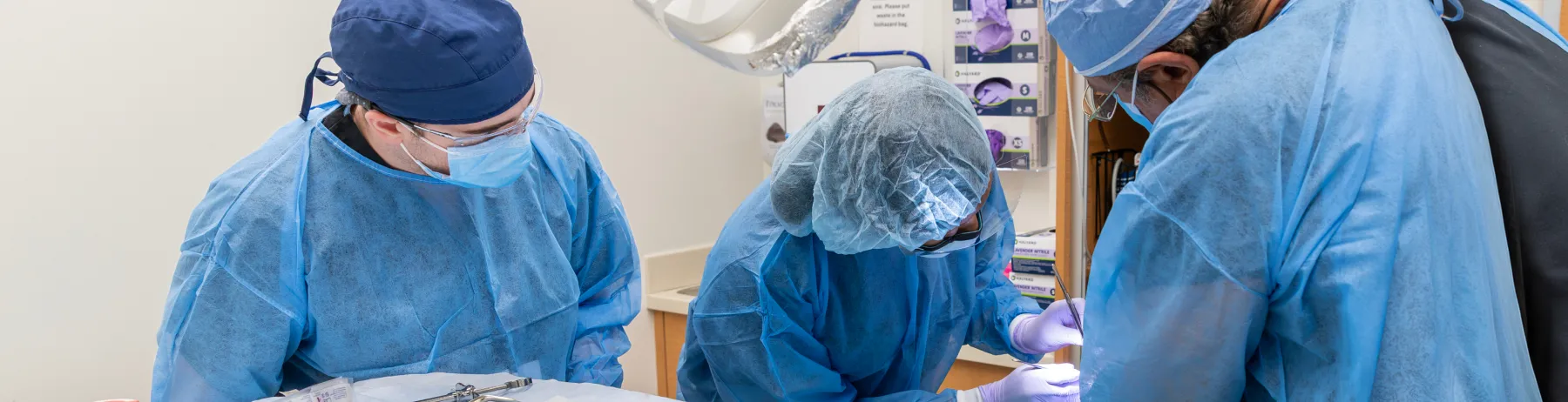
Home to one of only two surgical residency programs in the DFW area, the Department of Oral and Maxillofacial Surgery, staffed by board-certified medical and dental providers, is dedicated to patient-centered healthcare in the practice of treating defects and injuries of the head, neck, face, and oral cavity. It is our mission to provide our patients with highly advanced, evidence-based care utilizing the safe and innovative, high-quality treatment plans. Holding specialty and subspeciality training and certifications, our internationally recognized consultant surgeons are among the finest in the country and offering expertise across the breadth of contemporary maxillofacial surgery, including:
Services & Conditions We Treat
Corrective Jaw Surgery
Orthognathic surgery (jaw surgery) corrects facial and jaw abnormalities in which the facial bones and teeth are not correctly developed.
Cosmetic Surgery
Our surgeons can improve facial aesthetics by performing eye lifts, cheek augmentation, forehead and brow lifts, chin augmentation, nasal surgery, facelift and liposuction.
Dental Implants
The most contemporary form of tooth replacement, dental implants are small titanium posts, which are inserted into the jawbone where teeth are missing and act as root substitutes.
Facial Trauma and Reconstruction
Our specialists can perform a range of facial reconstructive surgeries to help you recover from varying degrees of facial trauma.
Head, Neck and Oral Cancer
We offer comprehensive, specialized care for patients with benign and malignant oral, head and neck cancer.
Non-Surgical Cosmetic Treatments
We provide a number of non-surgical cosmetic treatments to help our patients quickly and easily achieve facial rejuvenation, and to augment any of the surgical aesthetic procedures we provide.
Obstructive Sleep Apnea and Snoring
Skeletal surgical correction for sleep apnea through maxillomandibular (upper and lower jaw) advancement is more than 95 percent effective in its ability to significantly enlarge the upper airway and limit obstruction.
Reconstruction Of Head and Neck Defects
Our multidisciplinary team includes board-certified physicians with training in oral maxillofacial surgery, microvascular surgery, cosmetic surgery, maxillofacial prosthodontics, anaplastology, and general dentistry.
Temporomandibular Joint (TMJ) Surgery
Temporomandibular joint disease can affect one or both joints and is characterized by complex signs and symptoms often present with clicking, pain and/or limitation in opening.
Wisdom Teeth Removal
The removal of wisdom teeth is necessary when they are prevented from properly growing in, as poorly positioned, impacted teeth can cause many problems.
Patient Portal
Our electronic patient portal, MyChart, helps you keep all your oral healthcare information in one easy-to-access place.
Login To MyChartInsurance Information
As a teaching institution, our resident trainees are also on staff to accept non-insured patients. To schedule an oral surgery consultation with either a faculty surgeon or resident trainee, depending on your circumstances:
After Hours
Established patients will be given contact information for the oral surgeon on call. If you believe yourself to need emergency care, please go to the Baylor University Medical Center Emergency Room in Dallas or Texas Health Resources Harris Methodist Emergency Room in Fort Worth.
Clinic Directions and Parking
Paid parking is available on site in our Clinic and Education Building garage at 3000 Gaston Avenue, Dallas, Texas. Entrances are available from Gaston Avenue and Nussbaumer Street.
Map Link To Our ClinicParking Garage Information
- Texas A&M dentistry patients park free with validation
- Parking is free for Texas A&M Dentistry patients with validated ticket from clinic staff at the time of your appointment.
- payment
- Parking rates for non-patients range from $2.00 to a maximum of $10.00. Credit or debit cards can be used at the exit gate or at the Pay Stations located on the first and second floors. Cash can only be used at the Pay Stations.
- metered parking
- There are limited on-street public parking spaces - managed by the City of Dallas - surrounding the campus.
Meet Your Care Team
Our surgeons are nationally recognized experts with specialty and subspecialty training and certification. The faculty physicians offer the entire spectrum of contemporary maxillofacial surgery.

Likith V. Reddy, DDS, MD, FACS
Professor and Department Head Clerkship Director, Texas A&M School of Medicine, Department of Surgery Department of Oral and Maxillofacial Surgery
Andrew M. Read-Fuller, DDS, MD, FACS
Clinical Associate Professor Director, Oral and Maxillofacial Surgical Residency Program Department of Oral and Maxillofacial Surgery
Ehab Shehata, DDS, MD, MS, PhD, FACS
Clinical Associate Professor Department of Oral and Maxillofacial Surgery